


Table of Contents
- Step 1: Gather Your Archival Framing Materials
- Step 2: Choose the Right Glass for Your Framing Project
- Step 3: Select Archival Quality Matting Materials
- Step 4: Mount Your Document Without Adhesives
- Step 5: Assemble the Frame and Seal the Package
- How to Prevent Document Yellowing After Framing
- Common Mistakes to Avoid in Acid Free Framing
- Conclusion
- Frequently Asked Questions
Last Updated: September 25, 2026
Step 1: Gather Your Archival Framing Materials
Acid free framing for vintage documents starts with one rule: every material that touches the paper must be safe for it. Paper degrades when it sits against acidic wood, cardboard, or glue. The acids migrate into the sheet, and the damage cannot be undone.
At America's Memories, every framed piece is built with museum-quality archival materials. Before you begin, gather:
- Acid-free backing board (also called archival backing)
- pH neutral mat board, lignin-free
- UV-protective glass or acrylic glazing
- Hinge tape made from rice starch or linen
- Cotton gloves for handling
- A clean, flat work surface
Skip the corrugated cardboard and masking tape from the garage. They are the two most common causes of early document failure.
Step 2: Choose the Right Glass for Your Framing Project
UV-protective glass is the single most important upgrade for a framed document. Light exposure fades ink and yellows paper faster than almost anything else.
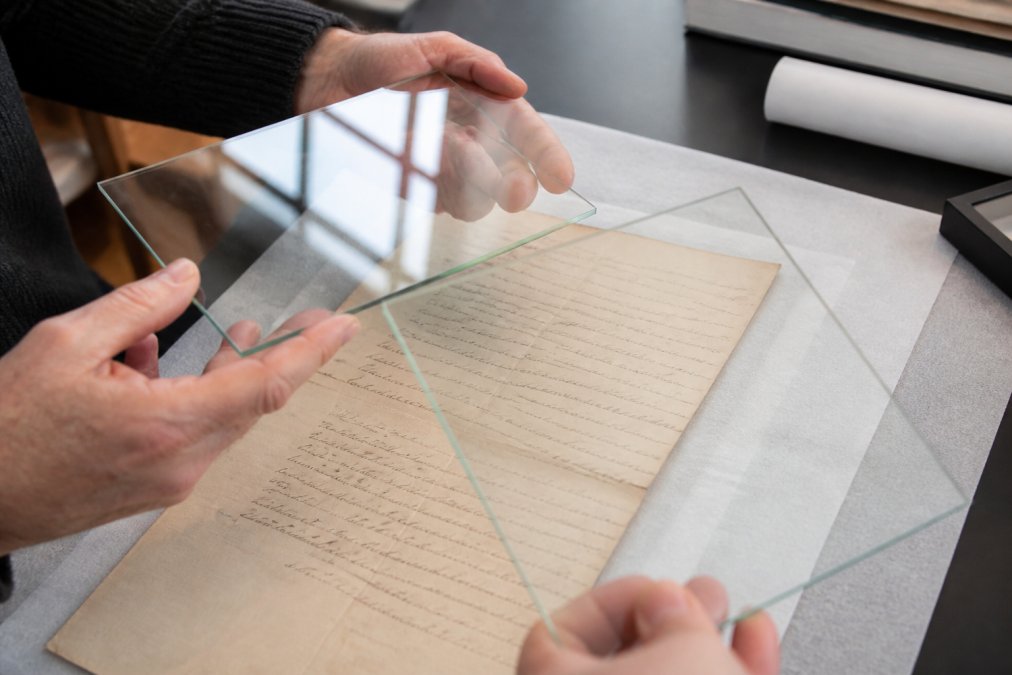
Museum glass vs regular glass for documents comes down to two things: UV blocking and glare.
Step 3: Select Archival Quality Matting Materials
Archival quality matting materials protect the document on two fronts: they keep the paper off the glass and they block acid migration from the frame itself.
Step 4: Mount Your Document Without Adhesives
Non-adhesive mounting is the standard for anything valuable. Glue, tape, and spray adhesive all fail the reversibility test: once they touch the paper, they leave a mark.
The accepted method is the hinge tape technique:
- Place the document face up on a clean surface
- Cut two strips of rice-starch hinge tape
- Attach one end to the top back edge of the document
- Attach the other end to the backing board
- Let the document hang freely from the top
Step 5: Assemble the Frame and Seal the Package
Sealing the frame keeps dust, insects, and humidity swings away from the paper. The order of assembly matters as much as the materials.

Build the package from the back forward:
- Acid-free backing board
- The mounted document, hinged at the top
- The mat board, cut to overlap the document edges
- UV-protective glass or acrylic
- The frame, with a dust cover on the back
How to Prevent Document Yellowing After Framing
Yellowing is not a stain that appears on paper, it is a chemical change inside the paper itself. Understanding the mechanism tells you exactly which levers to pull.
Why Paper Yellows
Most paper made after the mid-1800s was sized and pulped with alum-rosin and wood pulp, both of which leave acid compounds in the sheet. Two reactions drive the color shift:
- Acid hydrolysis, the acid breaks the long cellulose chains into shorter ones. Short chains absorb light differently, which is why aged paper looks brown and feels brittle.
- Oxidation, oxygen in the air reacts with lignin left in the pulp, producing chromophores (color-bearing groups). Lignin is the same compound that turns newsprint brown in a matter of weeks.
Test Before You Frame
You cannot fix acidity you have not measured. Two low-cost tools give you a reading in minutes:
- pH pen, a short electrode you touch to a dampened corner of the paper. Readings below 7.0 indicate acidic stock; below 5.0 means the document is actively degrading.
- pH testing strips, less precise but cheaper. Press a strip against a slightly moistened, inconspicuous edge and compare the color to the chart.
The Three Levers You Control
Light. Hang away from direct sun, and away from the reflected glare of a window that faces the frame. Rotate displayed pieces every three to six months so no single document absorbs years of cumulative exposure. A piece that spends most of its life in a dark drawer will outlast an identical piece on a bright wall by a wide margin.
A Hierarchy of Preservation
Not every document deserves museum-grade treatment. Match the spend to the value:
- Museum-grade, buffered mat, acid-free backing, museum glass, rice-starch hinges. Reserve this for signed pieces, historically significant documents, and anything you intend to pass down.
- Conservation-grade, buffered mat and backing, UV-filtering glass, non-adhesive corners. Appropriate for most vintage letters and photographs.
- Good-enough, acid-free backing and UV glass only, no mat. Acceptable for low-value items you simply want to display without accelerating decay.
Storage Between Displays
Unframed pieces should live flat in an acid-free box with archival tissue interleaved between sheets. Do not roll them, rolling stresses the fibers along the curve and creates creases that never relax. Do not store them in plastic sleeves unless the plastic is polyester (Mylar) or polyethylene; PVC and other common plastics off-gas hydrochloric acid and will damage the paper from the inside out.
Common Mistakes to Avoid in Acid Free Framing
The mistakes that ruin framed documents fall into two categories: materials that are wrong on contact, and techniques that are wrong because they cannot be undone. The second category is the one most collectors miss.
The Reversibility Test
Before any mounting method touches a document, ask one question: can a conservator remove this later without leaving evidence? If the answer is no, the method is wrong for anything with value.
- Hinging, a strip of rice-starch or linen tape attaches the top edge of the document to the backing. The document hangs freely, expands and contracts with humidity, and can be lifted off with a scalpel and a little moisture. This is the standard for conservation framing.
- Dry mounting, heat-activated tissue bonds the entire sheet to a board. It flattens beautifully and it is permanent. The adhesive penetrates the paper fibers, and removal damages the surface. Never dry-mount a signed document, a first edition, or anything you might sell.
- Photo corners, small acid-free pockets that hold the corners without adhesive. Reversible, but they can leave pressure marks over time and are best for items that will be handled rarely.
Materials That Fail on Contact
| Mistake | Why It Harms the Document | The Fix |
|---|---|---|
| Masking, Scotch, or duct tape | Leaves acid residue and stains that bleed through the sheet | Rice-starch or linen hinge tape |
| Corrugated cardboard backing | Off-gasses acid and lignin into the paper | Acid-free, lignin-free backing board |
| Regular glass in a bright room | Transmits UV that fades ink and yellows paper | UV-filtering glass or acrylic |
| PVC plastic sleeves | Off-gas hydrochloric acid | Polyester (Mylar) or polyethylene sleeves |
| Rubber cement or spray adhesive | Irreversible and chemically active | Non-adhesive mounting only |
| Wooden frame back in direct contact | Wood acids migrate into the paper | Seal with a barrier layer or use a metal frame |
Techniques That Fail Later
Trimming to fit. Cutting a document to fit a standard frame destroys its originality and a large share of its value. Cut the mat, never the paper. If the document is an odd size, order a custom mat or a larger frame.
How to Spot a Bad Frame Job
If you are buying a pre-framed piece or inheriting one, look for these signals before you trust it:
- Visible tape or adhesive residue on the document
- A brown or gray backing board visible from the back
- Glass that shows no UV-filtering label or coating
- The document pressed flat against the glass with no mat
- A wooden backboard in direct contact with the paper
Conclusion
Acid free framing for vintage documents rewards patience more than budget. The right backing, mat, glass, and mounting method cost a little more up front and protect the piece for a lifetime. The wrong shortcut, like tape or cardboard, can undo decades of care in a single season.
Frequently Asked Questions
What is the best way to frame an old newspaper?
Old newspaper is among the most fragile vintage paper because it is printed on high-lignin stock that turns brown and brittle quickly. Use acid free framing with a lignin-free mat and UV-protective glass, and mount the page with non-adhesive corners or edge strips rather than tape. Keep it out of direct sun and away from damp basements or hot attics, since light exposure and humidity cycles speed yellowing and paper brittleness faster than almost anything else.
Where can I find acid-free backing boards?
Art supply stores, custom frame shops, and online archival suppliers sell acid-free backing boards, often labeled as buffered or unbuffered. Buffered boards suit most vintage paper because the alkaline reserve neutralizes acid migration from the environment. Look for the term lignin-free on the label, since lignin is the natural compound in wood pulp that drives yellowing. If you are unsure, a custom frame shop can confirm the pH neutral rating before you buy.
Does acid-free mean archival quality?
Not automatically. Acid-free describes one property, a pH neutral or buffered material, while archival quality means the whole assembly is safe for long-term conservation. A true archival package combines acid-free backing, lignin-free mat board, non-adhesive mounting, and UV-protective glazing. A single acidic element, such as a cardboard backing or masking tape hinge, can undo the rest. Ask for the full material list, not just the acid-free claim.
How long will acid-free paper last?
Under stable conditions, acid-free and lignin-free paper can last well over a century without significant yellowing or embrittlement, while ordinary wood-pulp paper may degrade in 20 to 50 years. Longevity depends on storage and display: keep humidity steady, block UV light with museum glass or acrylic glazing, and avoid heat. Documents framed with acid free framing and stored laid flat when not displayed hold up far better than those exposed to light and damp.