


Table of Contents
- What You'll Need Before You Ship Expensive Collectibles
- Step 1: Choose the Best Packaging Materials for Memorabilia
- Step 2: Pack Framed and High-Value Items With the Two-Box Method
- Step 3: Understand How to Declare Value for Shipping
- Step 4: Add Shipping Insurance for Collectibles That Matches the Price You Paid
- Step 5: Choose a Carrier, Service Level, and Signature Confirmation
- Step 6: Document Condition, Climate, and Customs Before Handoff
- Common Mistakes That Lead to Denied Claims
- Frequently Asked Questions
Last Updated: September 18, 2026
What You'll Need Before You Ship Expensive Collectibles
Learning how to safely ship expensive collectibles starts long before you touch a box. The single biggest cause of damaged or denied shipments is preparation done in the wrong order: people pack first, then think about insurance, documentation, and carrier rules. That sequence guarantees trouble.
Before you seal anything, gather these:
- Rigid mailers and top loaders for flat items like cards and photos
- Penny sleeves to protect surfaces from scratches and handling oils
- Bubble mailers for low-value flat pieces only
- Corner protectors and foam padding for framed works
- Two boxes sized so one nests inside the other with cushioning between
- Tamper-evident tape and a permanent marker
- A camera or phone for a condition report
Step 1: Choose the Best Packaging Materials for Memorabilia
The right packaging materials for memorabilia depend on whether the item is flat or framed. Flat signed pieces and framed display pieces fail in different ways, so they need different defenses.
Rigid Mailers, Penny Sleeves, and Top Loaders for Flat Items
For flat collectibles, the standard is a layered system. A penny sleeve goes on first to prevent surface contact. The sleeved item then slides into a top loader or rigid mailer, which resists bending. That assembly goes inside a bubble mailer or box, never shipped loose.
Corner Protection and Shock Absorption for Framed Pieces
Framed pieces fail at the corners. Corner protectors absorb the first impact, and foam padding around the frame handles the rest. The goal is shock absorption: the frame should never touch the outer wall of the box directly. Glass and acrylic both crack under point pressure, so cushion every edge.
Step 2: Pack Framed and High-Value Items With the Two-Box Method
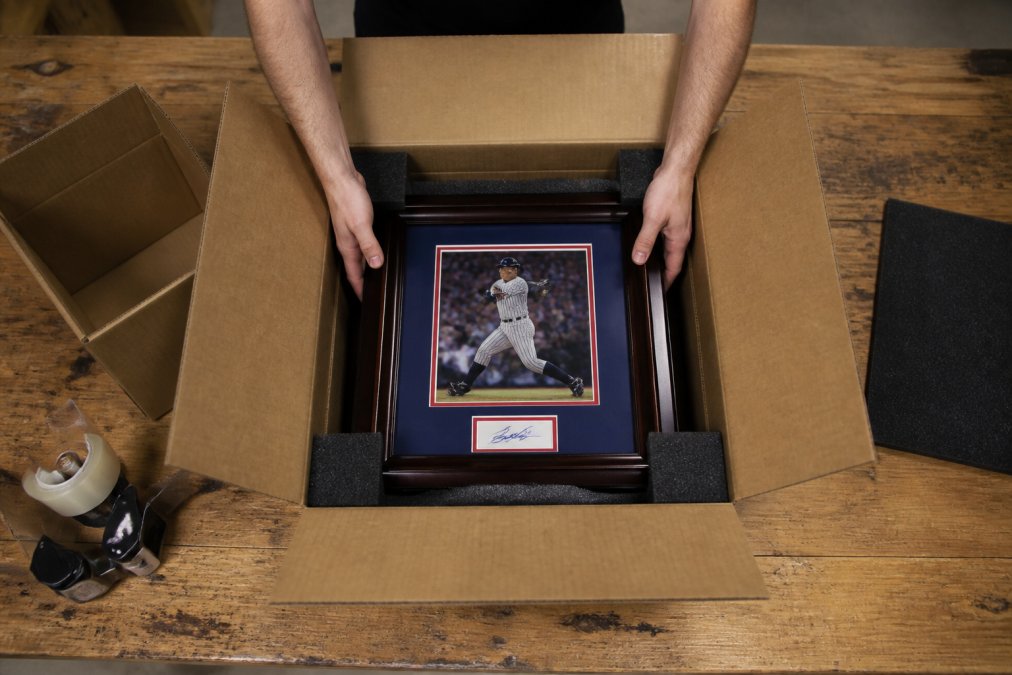
The two-box method is the industry standard for high-value goods: place the framed piece in a snug inner box, then suspend that box inside a larger outer box with cushioning on all six sides. No rigid surface touches another rigid surface.
Step 3: Understand How to Declare Value for Shipping
Declaring value means stating the item's actual worth on the shipping documents and insurance forms. Under-declaring to save on fees is the fastest route to a denied claim, because the carrier will only pay what you declared, not what you paid.
Step 4: Add Shipping Insurance for Collectibles That Matches the Price You Paid
Shipping insurance for collectibles should match the amount you actually paid, not a round number you're comfortable with. If a piece cost more than a carrier's default liability limit, you need either declared-value coverage or a third-party policy. The part most guides skip is what happens after something goes wrong, because the coverage you buy is only as good as the claim you can prove.
Carrier Liability vs. Third-Party Insurance
Carrier liability is the coverage built into the service, and it is usually capped well below the value of serious collectibles. Third-party insurance is a separate policy that covers the full declared amount and often handles claims more predictably. For anything worth several thousand dollars, third-party coverage is the safer choice.
| Coverage Type | Typical Limit | Claim Process | Best For |
|---|---|---|---|
| Carrier liability | Low built-in cap | Slow, carrier-controlled | Inexpensive items |
| Declared value | Set by you | Moderate | Mid-value pieces |
| Third-party policy | Full declared amount | Structured, documented | High-value collectibles |
What a Claim Actually Requires
Most denied claims are not denied because the item wasn't damaged. They're denied because the shipper couldn't prove four things: that the item was in the condition described, that it was packed to a reasonable standard, that it was worth what was declared, and that the damage occurred in transit rather than before or after.
- Proof of condition, timestamped photos or video of the item before packing, showing any pre-existing flaws. A single photo of a sealed box proves nothing.
- Proof of packing method, images of each layer as it goes in, including cushioning thickness and tape seals. This is what defeats a "insufficient packaging" denial.
- Proof of value, the original invoice, a completed sale record, or a written appraisal from a qualified appraiser. A screenshot of a listing is weak; a paid invoice is strong.
- Proof of delivery and handling, tracking history, signature confirmation, and photos of the parcel as received if damage is visible on arrival.
The Documentation Package to Keep
America's Memories ships every piece with secure, insured delivery, and a free advisory service can help you match coverage to value and assemble the documentation a claim will require.
Step 5: Choose a Carrier, Service Level, and Signature Confirmation
Signature confirmation is non-negotiable for expensive collectibles. It creates proof of delivery and prevents a parcel from being left on a porch. Pair it with a tracking number and, for the highest-value items, overnight or expedited delivery to shorten the window of risk.
Step 6: Document Condition, Climate, and Customs Before Handoff
Documentation is what separates a paid claim from a denied one. Before handoff, photograph the item, note any existing flaws, and record the packaging process. This condition report becomes your evidence if anything goes wrong. But three risks sit between your workbench and the buyer's door that most guides never address: environmental damage in transit, the evidentiary value of your documentation, and the customs treatment of a high-value collectible.
Build a Condition Report That Holds Up
A condition report is not one photo. It is a dated record of the item's state at the moment it left your hands. Include the following:
- Full-item photos from at least four angles under consistent lighting, plus close-ups of any existing flaws, scuffs, or restoration.
- A written description of condition using standard grading language where applicable, so the buyer and the insurer read the same thing.
- A timestamped video of the item being placed into its inner box and sealed. Video is harder to dispute than a still image because it shows sequence and continuity.
- The packing materials in frame, the top loader, the foam, the tape seal, so the method itself is documented, not just the item.
Protect Against Heat, Cold, and Humidity
Environmental damage is slow and invisible until the box is opened. Vintage paper, photographs, and autographed card stock are hygroscopic, they absorb and release moisture as humidity changes, which causes cockling, foxing, and ink migration. Adhesives on tape and labels soften in heat and fail in cold. Acrylic glazing becomes brittle in freezing temperatures and can crack under vibration that would be harmless at room temperature.
Practical controls:
- Add desiccant packets inside the inner box for paper-based collectibles, especially on multi-day ground routes or humid-weather shipping.
- Avoid ground transit in extreme heat or cold when the item is sensitive. Expedited air service shortens exposure to any single climate band.
- Never ship a framed piece that has just come in from a cold vehicle into a warm, humid space without letting it acclimate, and advise the buyer to do the same before unwrapping.
- Note the conditions at pickup, date, time, and weather, so any climate-related damage has a documented starting point.
Declare Customs Correctly for High-Value Collectibles
For international shipments, the customs declaration is a legal document, not a formality. Under-valuing goods to reduce duties is illegal and voids coverage. The declared value on the customs form must match the insured value and the invoice, or you have created a contradiction that both carriers and insurers treat as evidence of misrepresentation.
A few mechanics that matter for collectibles specifically:
- Use the correct commodity description. "Collectible" alone is vague. Describe the item accurately, for example, a signed photograph, a graded trading card, or a framed original artwork, and include the artist, maker, or subject where relevant.
- Attach the commercial invoice to the outside of the parcel in a clear document pouch, and keep a copy for your records.
- Understand that duty and tax liability generally falls on the recipient for most international shipments, and the buyer should be told this before purchase so a surprise customs bill does not become a refused delivery.
- Check whether the destination country restricts or requires permits for certain materials, ivory, tortoiseshell, and some animal-derived components used in antique collectibles are commonly restricted.
Common Mistakes That Lead to Denied Claims
Most denied claims trace back to a handful of avoidable errors. Poor packaging that lets the item shift, under-declared value, missing condition photos, and no signature confirmation are the usual suspects. Each one gives the carrier or insurer a reason to reject your claim, regardless of how legitimate it is.
Frequently Asked Questions
What is the safest way to ship high-value collectibles?
The safest approach combines rigid outer packaging with cushioning, full declared value, and signature confirmation. Use the two-box method for framed pieces: seal the item in an inner box, cushion it inside a larger outer box, and seal every seam with tamper-evident tape. Declare the full purchase price, buy shipping insurance for collectibles at that amount, and require an adult signature on delivery. Photograph the packed box and keep the receipt with your condition report until the parcel arrives.
How do I properly package autographed memorabilia for transit?
Flat signed photos and cards go in a penny sleeve, then a rigid top loader, then a team bag before sliding into a bubble mailer or flat rate box. Framed pieces need corner protectors, glass protection, and a layer of foam or bubble wrap at least two inches thick on every side. Never let the frame touch the outer wall of the box. Fill empty space so nothing shifts when the parcel is tilted, and seal all edges with tamper-evident tape.
Does UPS or FedEx offer better insurance for expensive collectibles?
Both major carriers sell declared value coverage, but limits, exclusions, and claims windows differ by service and by item type. Some high-value items may require third-party insurance. Compare the declared value cap, the documentation each carrier requires at claim time, and how they handle items packed by the shipper versus packed by a professional. For pieces worth several thousand dollars, third-party collectibles insurance often covers more per dollar of premium.
Should I use signature confirmation for expensive shipments?
Yes. Signature confirmation creates a proof of delivery record that shows who accepted the parcel and when, which matters if a claim or dispute arises. For items worth more than a few hundred dollars, choose adult signature required rather than standard signature. Keep the tracking number, the signature record, and your condition report together. If the recipient is not home, the carrier will hold the parcel rather than leave it on a porch, which removes the most common theft scenario.
Shipping something irreplaceable is a test of your process, not your luck. America's Memories removes most of that risk before a parcel ever leaves: every piece is forensically authenticated by board-certified examiners, framed with museum-quality archival materials, and delivered with secure, insured shipping backed by a lifetime authenticity guarantee. Get started with America's Memories and ship your collection with confidence.