


Table of Contents
- Why Protecting High Value Memorabilia From Light Matters
- Types of Light Damage That Fade Autographs and Collectibles
- How to Protect Autographs From Fading: Step-by-Step
- UV-Protective Glass for Memorabilia: What to Look For
- LED Lighting for Display Cases: Safe Illumination
- How to Store Autographs Long Term Away From Light
- Best Practices Checklist for Protecting Memorabilia From Light
- Conclusion
- Frequently Asked Questions
Last Updated: October 15, 2026
Why Protecting High Value Memorabilia From Light Matters
Light damage is the quietest threat in a collection. It works every day, whether or not anyone is watching. Protecting high value memorabilia from light is the single most overlooked step in long-term ownership, and it is the one step that cannot be reversed once fading begins.
Ink, paper, and photographic emulsion all react to light exposure. Ultraviolet radiation breaks down the chemical bonds that hold a signature dark and legible. Over months and years, a bold autograph turns brown, then faint, then gone. At America's Memories, every piece ships in museum-quality archival framing for exactly this reason: preservation starts the day a collectible arrives, not the day it starts to fade.

The stakes are simple. A faded signature loses both its visual power and a large share of its market value. A well-protected one holds both. Below, we break down the types of light damage, the materials that block it, and a practical checklist any collector can follow.
Types of Light Damage That Fade Autographs and Collectibles
Two kinds of light damage matter most: ultraviolet (UV) damage and visible-light damage. UV radiation causes the fastest and most severe fading. Visible light, especially blue light, causes slower but steady damage over years of display.
Here is how each type affects a collection:
- UV radiation: Breaks down ink pigments and paper fibers. Causes yellowing, brittleness, and rapid fade.
- Visible light: Slowly bleaches inks and photo emulsions, even in small daily doses.
- Infrared (heat): Dries out paper and can warp or crack frames over time.
- Fluorescent tubes: Emit UV unless filtered, and are common in home and office lighting.
- Direct sunlight: The worst offender. A signature near a sunny window can fade within a single season.
The type of ink matters too. Older fountain pen inks and early ballpoint inks are more light-sensitive than modern archival pigments. That makes vintage signatures, like a classic film star's autograph or a mid-century historical document, especially vulnerable.
How to Protect Autographs From Fading: Step-by-Step
Protecting autographs from fading comes down to three moves: block UV, control visible light, and limit exposure time. Follow these steps in order.
- Move the piece out of direct sun. Keep it off walls that face windows or receive strong afternoon light.
- Use UV-filtering glass or acrylic. This blocks the most damaging wavelengths before they reach the ink.
- Add a light-blocking backing. A solid backer stops light from passing through from behind.
- Switch to low-UV bulbs. LED is the safest common option for display areas.
- Cap daily light exposure. Keep display lighting on only when the room is in use.
- Rotate displayed pieces. Swap them out every few months to spread exposure.
- Store the rest in the dark. The safest place for any collectible is a cool, dark, dry space.
A common mistake is assuming a frame alone protects a piece. It does not. Standard glass blocks very little UV, and a bright room still fades ink behind it. The frame only helps if the glazing is rated for UV protection.
UV-Protective Glass for Memorabilia: What to Look For
UV-protective glass for memorabilia is glazing treated or manufactured to block the ultraviolet portion of the light spectrum. It is the single most important upgrade for any displayed collectible.
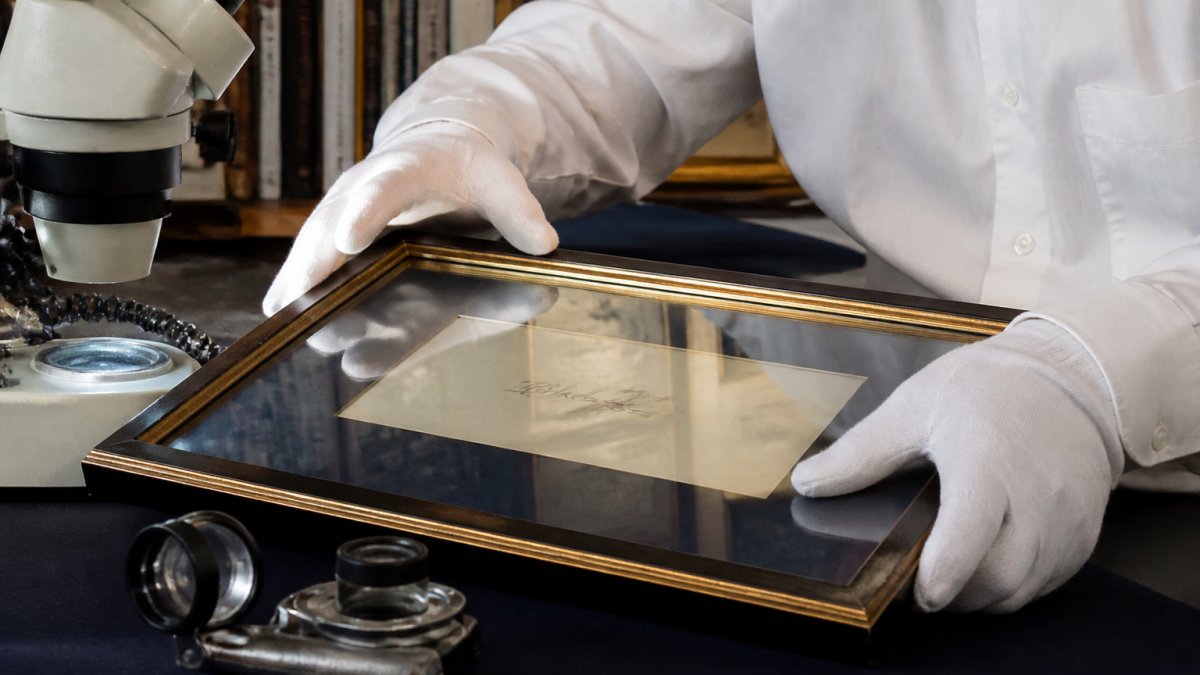
What to check before buying:
- UV blocking rating: Look for 97% or higher. Better glazing blocks 99%.
- Glass vs. acrylic: Acrylic is lighter and shatter-resistant. Glass is more scratch-resistant.
- Anti-reflective coating: Cuts glare so the piece can be viewed without harsh light.
- Acid-free backing: Protects against chemical damage, not just light.
- Sealed frame edges: Reduces dust, moisture, and stray light.
Here is a quick comparison of the main glazing options:
| Glazing Type | UV Blocking | Best For | Trade-Off |
|---|---|---|---|
| Standard glass | Low | Temporary display | Offers little UV protection |
| UV-filtering glass | High | Long-term wall display | Heavier, costs more |
| UV-filtering acrylic | High | Large or shipped pieces | Can scratch more easily |
| Anti-reflective UV glass | Highest | High-value focal pieces | Highest cost |
Museum-quality framing, like the archival presentation used on every America's Memories piece, pairs UV-filtering glazing with acid-free mats. That combination protects against both light and chemical damage at once.
LED Lighting for Display Cases: Safe Illumination
LED lighting for display cases is the safest common choice because LEDs emit almost no ultraviolet radiation. That makes them a strong fit for collectors who want to light a piece without speeding up its fade.
Key points for display lighting:
- Choose warm-white LEDs. They produce less blue light than cool-white bulbs.
- Keep lights off when not viewing. Exposure time adds up fast.
- Add a dimmer. Lower brightness means slower fading.
- Avoid heat buildup. LEDs run cool, which protects paper and frames.
- Use enclosed cases. A glass or acrylic case with LED strips limits stray light.
- Filter any remaining UV. A thin UV film on case glazing adds a second layer of defense.
LEDs are not a free pass. They still emit visible light, and visible light still fades ink over time. The goal is to reduce both the intensity and the hours of exposure, not just the UV.
How to Store Autographs Long Term Away From Light
Storing autographs long term means total darkness, stable temperature, and low humidity. Storage is where the most valuable pieces should spend most of their life.
Follow these storage rules:
- Use acid-free folders and boxes. Regular cardboard and plastic sleeves can off-gas and stain.
- Store flat or upright, never rolled. Rolling stresses paper and ink over time.
- Keep the space dark. A closet or drawer beats a shelf near a window.
- Hold temperature steady. Big swings cause paper to expand and contract.
- Control humidity. Damp air invites mold, which damages paper fast.
- Handle with clean, dry hands or cotton gloves. Oils from skin transfer to paper.
- Inspect once or twice a year. Catch any change early, before it spreads.
For pieces that stay on display, rotate them with stored items. A piece shown for three months and stored for nine will outlast one shown year-round by a wide margin.
Best Practices Checklist for Protecting Memorabilia From Light
Use this checklist to audit any collection. It works for a single framed piece or a full wall of displays.
- No piece hangs in direct sunlight
- All displayed pieces use UV-filtering glass or acrylic rated 97% or higher
- Frames have acid-free mats and backing
- Display lighting uses warm-white LEDs
- Lights are off when the room is empty
- Displayed pieces rotate every few months
- Stored pieces sit in acid-free boxes in a dark, dry space
- Temperature and humidity stay stable year-round
- Hands are clean or gloved when handling any piece
- The collection gets a light-damage check twice a year
Run through this list once a season. Small fixes, like moving a frame or adding a UV film, take minutes and protect a piece for decades.
Conclusion
Light damage is slow, silent, and permanent, which is why it slips past so many collectors. The fix is not complicated: block UV, control visible light, and limit how long a piece stays lit. A few practical habits and the right framing materials protect both the look and the value of a collection for the long term. Collectors who treat light as a real threat, not an afterthought, are the ones whose autographs still read clearly decades later.
Frequently Asked Questions
Does sunlight damage autographs and memorabilia?
Yes. Ultraviolet (UV) radiation from sunlight breaks down the inks and paper fibers in signed pieces, causing signatures to fade and yellow over time. Even indirect sunlight through a window exposes memorabilia to UV rays. Displaying items in rooms with heavy sun exposure speeds up this damage. To protect memorabilia from light, keep pieces out of direct sun and use UV-filtering glass or acrylic in the frame.
Does UV-protective glass prevent fading?
UV-protective glass blocks most of the ultraviolet radiation that causes fading, but it does not stop fading entirely. Visible light and heat still contribute to ink degradation over long periods. UV glass is a critical layer of protection, not a complete solution. Combine it with lower light levels, LED bulbs, and limited display time for the best results when protecting high value memorabilia from light.
How should I store memorabilia to prevent light damage?
Store pieces in acid-free folders or archival boxes inside a dark, climate-controlled space. Keep items away from windows, overhead fluorescent fixtures, and any area with constant illumination. If you rotate a display, return items to dark storage when not shown. For long-term storage of autographs, use archival sleeves and a closed cabinet to block light entirely.
How can I tell if light has faded an autograph?
Signs include ink that looks lighter than when you acquired it, paper that has yellowed unevenly, and color shifts in photos or printed elements. Compare the piece to a high-resolution photo taken at purchase. If you notice dulling in areas that received the most light exposure, fading has likely begun. Move the item to a dark location and consult a conservator for options.