


Table of Contents
- Why Archival Framing Protects Autograph Value
- How to Preserve Signed Photographs with Archival Methods
- Acid-Free Materials for Autograph Framing
- UV Protection for Framed Autographs
- How to Display Autographed Photos Without Damage
- Archival Framing and Long-Term Resale Value
- Care, Inspection, and Maintenance After Framing
- Frequently Asked Questions
Last Updated: October 9, 2026
Why Archival Framing Protects Autograph Value
Archival framing autograph value is protected by using acid-free materials, UV-filtering glass, and reversible mounting techniques that prevent deterioration. When collectors invest in authenticated signatures, the preservation method determines whether that piece appreciates or declines over decades.
The difference between standard framing and archival framing comes down to chemistry and materials. Standard frames use materials that off-gas acids, emit harmful gases, and allow light damage. Archival methods eliminate these threats entirely. Understanding archival framing autograph value means recognizing that a signature framed with acid-free mat board, UV-filtering glazing, and proper spacing will remain vibrant and authentic.
At America's Memories, every authenticated autograph is professionally framed using museum-grade archival materials. This isn't just about aesthetics. Proper archival framing directly impacts resale value, collector confidence, and long-term preservation. A piece framed correctly can appreciate. A piece framed poorly becomes a liability.

How to Preserve Signed Photographs with Archival Methods
Preserving signed photographs requires three core principles: prevent the signature from touching glass, use acid-free materials throughout, and control environmental factors. These steps work together to protect ink from fading, transfer, and chemical deterioration.
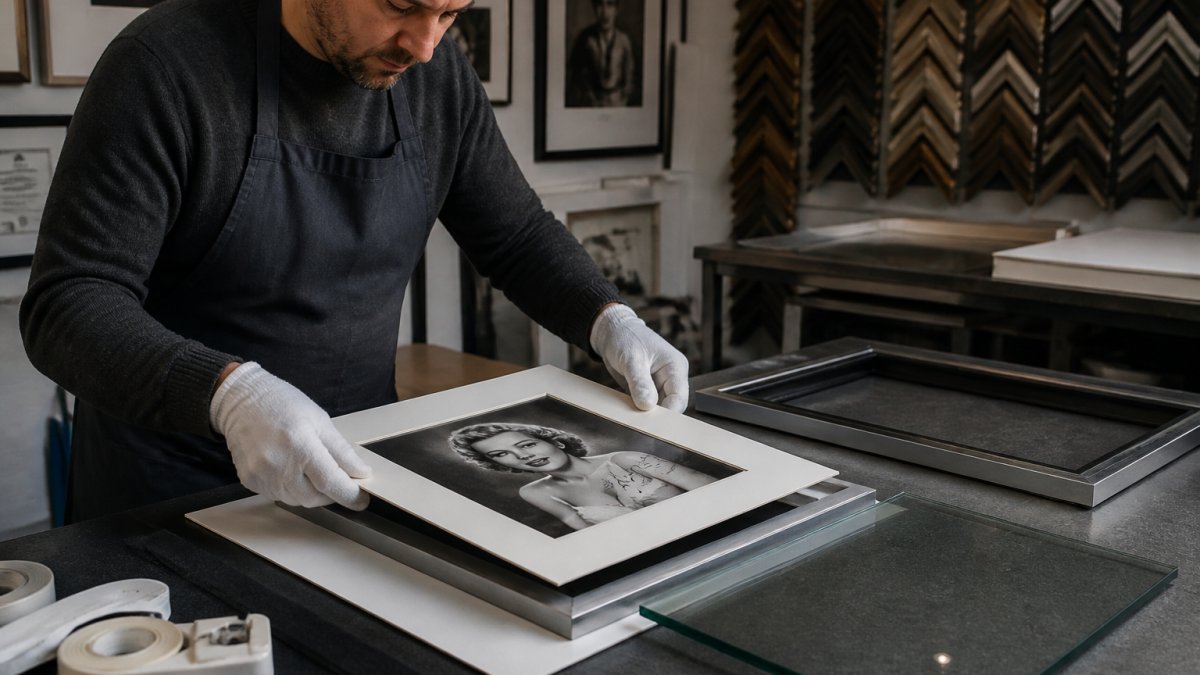
The most common mistake collectors make is framing a signed photo the same way they'd frame a poster. Signatures are vulnerable. Ink sits on paper. Paper absorbs moisture and acids. Glass can trap humidity directly against the signature.
Archival preservation reverses this. The signature stays protected inside layers of acid-free material with controlled spacing. Light exposure is filtered. Humidity is managed. The piece stays stable for generations.
Preventing Signatures from Touching Glass
The signature must never contact the glass directly. When glass touches ink, moisture collects between them. That moisture causes ink to fade, transfer, or bleed into the mat board. Over time, the signature becomes illegible.
The solution is simple: create a physical barrier. A spacer, typically acid-free foam core or conservation-grade plastic, sits between the glass and the mat board. This gap, usually a quarter-inch to half-inch, prevents condensation from reaching the signature. Air circulates freely. Moisture cannot pool.
When framing a signed photo, position the spacer so it sits behind the mat opening but in front of the backing board. The signature sits safely in this protected zone.
Using Spacers and Window Mats
A window mat creates the opening that shows the signature while hiding the spacer behind it. The mat board itself must be acid-free conservation board, not standard mat board.
The window mat serves two purposes. It frames the visible area of the signature, and it holds the spacer in place. The spacer sits between the mat and the glass, creating that critical air gap.
Collectors often ask whether they can reframe a piece later. The answer is yes, if it was framed correctly the first time. Reversible mounting means the signature can be removed without damage. Adhesives used in archival framing don't bond permanently to the paper.
When selecting a window mat, choose one with a beveled edge. The bevel adds visual sophistication and protects the mat opening from dust and handling damage.
Acid-Free Materials for Autograph Framing
Acid is the silent killer of autographs. Paper naturally contains lignin, which converts to acid over time. Standard framing materials accelerate this process. Acid-free materials stop it.
Every component that touches or sits near the signature must be acid-free: the mat board, the backing board, the adhesive, and any spacer material. A single acid-containing component will migrate into the paper and damage the signature over decades.
Selecting Acid-Free Backing and Mat Board
Backing board sits behind the signature, providing structural support. Standard backing board is made from wood pulp, which yellows and becomes brittle. Conservation backing board is made from alkaline-buffered material that resists deterioration.
The mat board visible in the frame opening should also be acid-free. Look for conservation-grade mat board labeled as "acid-free" and "lignin-free." Many manufacturers now produce archival mat board in colors that complement vintage signatures.
The thickness matters too. A mat board between 4-ply and 8-ply provides enough support without adding unnecessary bulk. Thicker boards look more substantial but don't improve preservation.
Avoiding Damage from Adhesives and Mounting
Many collectors worry about adhesives damaging signatures. The concern is valid, but only with the wrong adhesive. Permanent adhesives like rubber cement or hot glue will permanently bond the signature to the mat. If someone tries to remove the piece later, they'll tear the paper.
Archival mounting uses reversible adhesives. These adhesives hold the paper in place during framing but allow safe removal later. Common reversible options include:
- Archival tape (made from acid-free paper and starch-based adhesive)
- Mounting corners (small sleeves that hold the paper without adhesive contact)
- Wheat paste (a traditional reversible adhesive used by conservators)
The best approach is to avoid adhesive entirely. Mounting corners let the signature float within the mat opening without any adhesive touching the paper. This method is fully reversible and leaves zero marks.
Never use spray adhesive, double-sided tape, or glue sticks on an autographed item. These are permanent and will damage the signature irreversibly.
UV Protection for Framed Autographs
Ultraviolet light fades ink faster than any other environmental factor. Signatures written in ballpoint pen, marker, or fountain pen ink all fade under UV exposure. Over five to ten years, a signature in a standard frame will visibly lighten. The colors shift. The ink loses vibrancy.
UV-filtering glazing blocks 99% of ultraviolet light while remaining optically clear. The signature looks exactly as it should, but it ages decades slower.
Choosing UV-Filtering Glazing
Two main options exist: UV-filtering acrylic and UV-filtering glass (museum glass). Both block UV light. The choice depends on the piece and the collector's priorities.
UV-filtering acrylic (often sold as OP-3 acrylic) is lighter, shatter-resistant, and less expensive. It works well for smaller pieces and pieces that won't be handled frequently.
Museum glass (UV-filtering glass) is heavier, more durable, and optically superior. It doesn't scratch, doesn't build static charge, and looks more professional. It costs more and is heavier to ship and hang.
For valuable autographs like authenticated celebrity signatures or historical documents, museum glass is the better choice. For smaller pieces or pieces in high-traffic areas, UV-filtering acrylic works well.

Both options filter visible light slightly, reducing glare. This actually improves how the signature looks on the wall.
Protecting Ink from Fading and Transfer
Ink fades when exposed to light and heat. Transfer occurs when humidity causes ink to migrate from the paper into the mat board or glass. Both problems are prevented by the same methods: UV filtering and humidity control.
A signature written in ballpoint pen is more stable than one in fountain pen ink or marker. Ballpoint ink sits on top of the paper. Fountain pen ink soaks into the fibers. Marker ink can bleed if exposed to moisture.
Regardless of ink type, UV-filtering glazing and proper spacing prevent fading. The spacer prevents the signature from contacting the glass, which prevents ink transfer. Combined with acid-free materials, these steps protect the signature for generations.
How to Display Autographed Photos Without Damage
Display location determines how quickly an autograph deteriorates. A signature hung in direct sunlight will fade visibly within two years. The same signature in indirect light will remain vibrant for decades.
Collectors should consider three factors: light exposure, humidity, and temperature.
Managing Light Exposure
Position the frame away from direct sunlight. North-facing walls are ideal. East or west-facing walls work if the frame isn't in the direct path of morning or afternoon sun. South-facing walls expose the frame to intense light all day.
Even indirect light fades signatures over time. The solution is simple: reduce light exposure. Hang the frame in a room that doesn't get bright sunlight. Use window treatments to filter harsh light. If the piece is in a high-light area, rotate it periodically, display it for six months, then store it for six months.
This rotation method is especially useful for pieces that are valuable investments. The signature stays fresher longer because it spends less time exposed to light.
Controlling Humidity and Temperature
Humidity causes paper to expand and contract. This movement stresses the signature. High humidity can cause ink to bleed. Low humidity makes paper brittle. The ideal range is 40-55% relative humidity and 65-75 degrees Fahrenheit.
Many collectors live in climates where humidity fluctuates dramatically. Basements are too damp. Attics are too dry. The best display location is a climate-controlled room away from direct sunlight.
Avoid displaying autographs in bathrooms, kitchens, or near heating vents. These areas experience humidity swings that damage paper. If the only available wall is in a fluctuating environment, consider storing the piece and rotating it into display periodically.
A small hygrometer (a device that measures humidity) costs under twenty dollars and tells the collector exactly what conditions the frame is experiencing.
Archival Framing and Long-Term Resale Value
Collectors often ask whether archival framing affects resale value. The answer is direct: it affects it dramatically.
A signature framed with archival methods in museum-grade materials will appreciate or hold value. The same signature framed with standard materials will decline in value.
Serious collectors and dealers evaluate pieces by condition first. An authenticated signature in perfect condition commands premium prices.
Archival framing is an investment that pays dividends. The cost of proper framing is typically 10-15% of the piece's value. The preservation benefit protects an investment worth far more.
Authentication adds another layer of value protection. When a signature is authenticated by forensic examination and comes with documentation of that authentication, buyers have confidence in the piece's legitimacy.
A collector who buys an authenticated, properly framed autograph is making an investment that holds value or appreciates.
Care, Inspection, and Maintenance After Framing
Once an autograph is framed, the collector's job is to maintain the conditions that preserve it. This means periodic inspection and environmental management.
Every six months, examine the frame for signs of damage:
- Check the glass for condensation or fogging (a sign of humidity infiltration)
- Look at the mat board for discoloration or staining
- Examine the signature itself for fading or ink transfer
- Feel the frame edges for moisture or warping
If condensation appears inside the frame, humidity is too high. Move the frame to a drier location or use a small dehumidifier in the room.
Never clean the glass with standard glass cleaner. The ammonia can seep into the frame and damage the signature.
If the frame is ever damaged, the glass cracks, the mat tears, or moisture infiltrates, have it professionally reframed immediately.
Store spare documentation about the piece: the certificate of authenticity, any forensic examination reports, and photographs of the piece before framing.
Collectors who maintain their framed autographs properly find that the pieces stay vibrant for decades. The signature remains as fresh as the day it was authenticated.
Proper archival framing isn't optional for serious collectors. Museum-grade archival materials, UV protection, acid-free components, and proper spacing ensure that authenticated autographs stay pristine, maintain value, and become treasured pieces for generations.
Frequently Asked Questions
What does archival framing mean for an autograph?
Archival framing uses museum-grade materials, UV-filtering glazing, acid-free mat board, conservation backing, and reversible mounting methods, to protect signed documents and photographs from deterioration. This approach prevents ink fading, signature transfer, and material breakdown that reduce both the condition and value of collectibles. Archival framing is designed to preserve autographs for decades or centuries with minimal intervention.
How does archival framing help protect an autograph's value?
Collectors and dealers assess autographs based on condition, and archival framing directly maintains that condition. By blocking UV light, controlling humidity exposure, and using non-reactive materials, archival framing prevents the physical deterioration that lowers resale value. Documented archival preservation also signals serious stewardship to future buyers, making the collectible more desirable and supporting its market price over time.
Should an autograph touch the glass in its frame?
No. Direct contact between a signature and glass accelerates ink transfer, causes moisture accumulation, and can lead to permanent damage. Archival framing uses spacers or window mats to create air gaps between the autograph and glazing. This separation is essential for long-term preservation and is a standard practice in museum and conservation framing.
What materials should be used to frame an autograph?
Use UV-filtering glazing (such as museum glass or OP-3 acrylic), acid-free mat board, acid-free backing, and reversible mounting methods like hinges or conservation tape instead of adhesives. These materials prevent chemical reactions that degrade paper and ink. Avoid lamination, which is permanent and reduces authenticity. Professional archival framing ensures your collectible remains protected and maintains its condition for resale.