


Table of Contents
- Does Reframing Autographs Void Authenticity? The Direct Answer
- How to Protect Autographs in a Frame During Reframing
- The Autograph Certificate of Authenticity: What Reframing Can and Cannot Change
- Autograph Provenance Documentation: Keeping the Paper Trail Intact
- Archival Framing for Signed Photographs: Materials That Protect Value
- Risks of Reframing: Fading, Contact Damage, and Handling Mistakes
- A Low-Risk Reframing Procedure, Step by Step
- When to Leave the Frame Alone: Insurance, Resale, and Guarantee Considerations
- Frequently Asked Questions
Last Updated: October 20, 2026
Does Reframing Autographs Void Authenticity? The Direct Answer
Reframing autographs does not void authenticity. Authenticity is a fact about the signature itself, not about the frame around it.
Most guides get this wrong. Reframing can hurt an autograph, but the risk is physical damage during handling, not a sudden loss of authenticity.
Reframing autographs is the process of moving a signed item from one frame assembly into another. Done carefully, it preserves everything.
How to Protect Autographs in a Frame During Reframing
Protecting a signed piece starts before anyone touches the frame. The single most important rule: the autograph should never touch the glazing. Use mats or spacers to hold the paper back from the glass.
A few practical safeguards:
- Photograph the piece in its current frame before you start
- Work on a clean, padded surface with no food or drink nearby
- Wear clean cotton or nitrile gloves
- Keep the signed surface face-up whenever possible
- Never stack weight on the glazing
Mats do double duty: they buffer ink from glass and keep the signed area from rubbing. Spacers, thin strips hidden behind the frame lip, do the same job when a mat is not practical.
The Autograph Certificate of Authenticity: What Reframing Can and Cannot Change
An autograph certificate of authenticity is a document stating that a specific item's signature has been examined and judged genuine, usually by a named examiner or service. Reframing does not change what the certificate says.
"Authenticity" is not one thing but three that move independently:
- Physical genuineness. The ink on the paper was applied by the named person. Reframing has no effect on this. A microscope or forensic-grade magnification equipment examination reaches the same conclusion before and after a frame change.
- The third-party opinion. An examiner's report or letter is a snapshot of that examiner's judgment on a given date. It remains valid as an opinion, but it describes the item as it was examined. If the item's condition changes materially, the opinion still stands as history, but a future buyer may want a fresh look.
- The seller's guarantee. A lifetime authenticity guarantee is a contractual promise tied to the item and usually to the original documentation. This is the layer reframing can actually affect, and only if the paperwork is lost, altered, or separated from the piece.
That third layer is where the real risk lives. A guarantee is only as strong as the chain connecting paper to object.
Keep these points in mind:
- Store the certificate separately from the frame, in a safe, dry place
- Keep a photo of the certificate with your records
- Never write on or alter the certificate
- If the certificate references the display, note the change in your own records
- If the certificate includes a tamper-evident seal or label affixed to the frame or backing, photograph it in place before you open anything and contact the authenticator before disturbing it
A certificate is only as useful as its traceability. Reframing autographs is fine as long as the documentation still points clearly to the item.
Autograph Provenance Documentation: Keeping the Paper Trail Intact
Provenance is the recorded history of an item: who owned it, how it was sold, and what proof travels with it. Reframing is when paper trails get lost, receipts tucked into old frames and thrown out with the packaging.
Build a simple file for each piece. Include:
- The original purchase receipt or invoice
- The certificate of authenticity
- Any examiner report or forensic documentation
- Photos before and after reframing
- A short note on the date and reason for the reframe
That file is your chain of custody. If you ever sell, insure, or donate the piece, the buyer or insurer will want it.
Archival Framing for Signed Photographs: Materials That Protect Value
Archival framing for signed photographs means using materials that will not damage the paper or ink over time. The core requirements are acid-free mat board, acid-free backing, and UV-filtering glazing.
Look for these material standards:
- Mat board: acid-free and lignin-free, often labeled conservation or museum grade
- Backing: acid-free foam board or corrugated board
- Glazing: UV-filtering glass or acrylic
- Mounting: photo corners or archival hinges, never household tape
- Frame: wood or metal with a sealed back to keep out dust and insects
Skip the tape. Pressure-sensitive tapes yellow, dry out, stain paper, and make reversal risky. Photo corners hold the item without adhesive touching the signed surface.
Risks of Reframing: Fading, Contact Damage, and Handling Mistakes
Fading is the slowest and most common killer of signed pieces. Ultraviolet light breaks down ink and paper over years, so a signature that looks fine today can fade to a ghost in a sunny room. Contact damage is faster: when paper rests against glass, humidity can cause it to stick, and pulling it free can lift ink or tear the surface.
Handling mistakes round out the list:
- Bending or creasing the paper while lifting it
- Touching the ink with bare fingers, leaving oils behind
- Dropping the item during transfer
- Using dirty or damp work surfaces
- Reassembling the frame too tightly, which can press the item into the glazing
A Low-Risk Reframing Procedure, Step by Step
A careful reframe follows a fixed sequence. Work slowly, and stop if anything feels stuck. These steps assume a paper-based signed item, a photograph, a letter, a cut signature, or a signed book page.
- Document first. Photograph the framed piece, the back, the certificate, and any seal or label in flat, even light. These photos are your condition record and proof if a dispute arises.
- Clear a workspace. Use a clean, padded table away from sunlight and liquids, covered with fresh acid-free paper or clean cotton. Never work on newspaper, the ink offsets.
- Put on gloves. Clean cotton or nitrile gloves protect the ink from oils. Change gloves if they touch your face or a dirty surface.
- Remove the backing. Take out staples, points, or brads gently with a proper tool, not a kitchen knife. Keep the old backing and labels, they are part of the provenance.
- Check for sticking. If the paper clings to the glass, stop. Do not pull. Humidity is usually the cause, and a conservator can soften the bond safely. Forcing it is the one mistake that turns a display issue into permanent damage.
- Lift with support. Slide a rigid board under the item before moving it. Never lift a signed photograph or letter by one corner, paper tears along the grain and ink can crack at a fold.
- Inspect and clean dry. Use a soft brush only. No liquids on the signed surface. If the item is flaking or the ink is lifting, stop and consult a conservator.
- Rebuild with archival materials. New acid-free mat, backing, and UV glazing. Keep the signed surface off the glazing with a mat or spacers.
- Seal and label. Seal the back, and note the reframe date on a label. Record the materials used.
- File the paperwork. Add new photos and notes to your provenance file.
Material-specific handling notes. The steps are the same for every item, but risks differ by medium:
- Signed photographs. Glossy photo paper is the most prone to sticking to glass. Use a mat with a bevel cut so only the mat touches the glazing. Never use household tape on the photo surface, photo corners or archival hinges only.
- Letters and documents. Older paper is often acidic and brittle. Support it fully on a rigid board before moving it, and avoid unfolding a creased letter more than necessary.
- Ink signatures versus marker signatures. Ballpoint and fountain-pen ink sit on the surface and can crack or flake; felt-tip and marker signatures can bleed if exposed to moisture or solvent. Keep both away from liquids and never attempt to clean a signature.
- Cut signatures and index cards. These are small and easy to drop. Work over the padded table, not over the floor, and keep them in an archival sleeve until they are mounted.
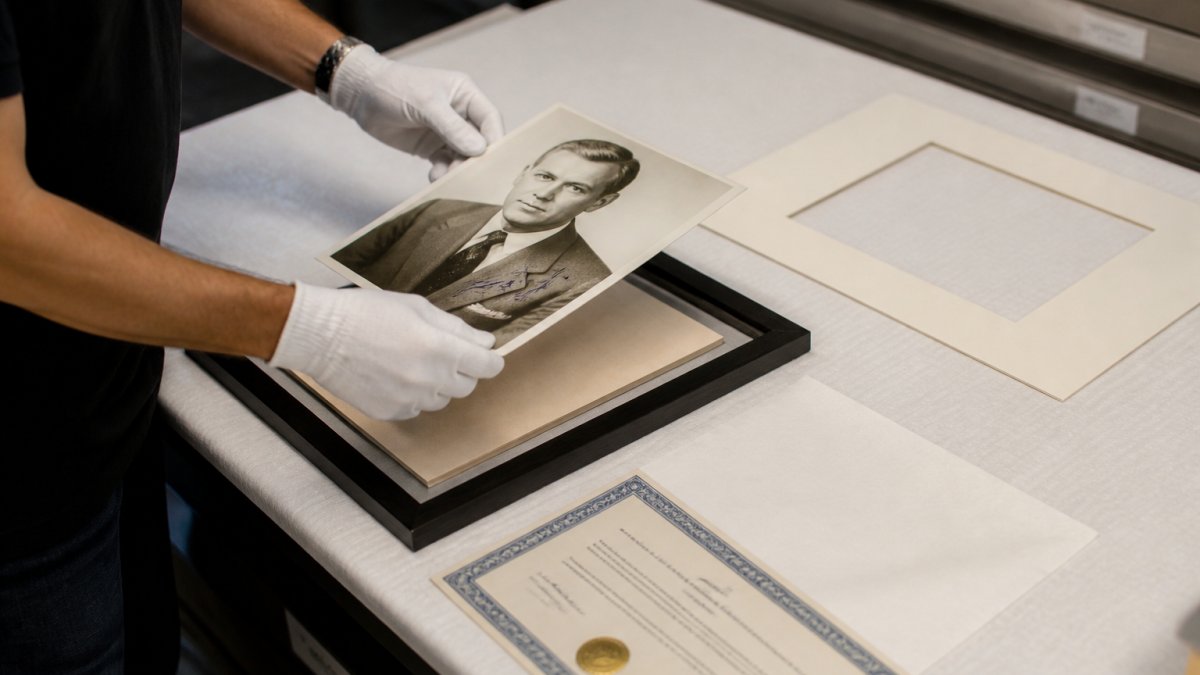
Expected result: the item sits in fresh archival materials, untouched by adhesive, with a complete photo record.
When to Leave the Frame Alone: Insurance, Resale, and Guarantee Considerations
Sometimes the right move is no move at all.
Leave the frame alone when:
- The current framing already uses acid-free materials and UV glazing
- The item is fragile, flaking, or stuck to the glass
- An insurer or appraiser has documented the piece in its current state
- A guarantee or warranty references the original framing
Insurance and resale both reward stability. An appraisal describes a specific item in a specific condition.
For collectors who want the display handled right from the start, America's Memories frames each piece in museum-quality archival materials and backs it with a lifetime authenticity guarantee. That takes the reframing question off the table for most buyers.
Pros and cons of reframing:
| Pros | Cons |
|---|---|
| Fresh archival materials extend life | Handling risks damage to fragile items |
| UV glazing slows fading | Cost of conservation-grade supplies |
| Better display and presentation | May require a new appraisal |
| Chance to document condition | Old certificate may reference old frame |
What to do if the autograph is stuck to the glass: do not force it. Paper bonded to glass can tear and lift ink.
Does reframing autographs affect value? Only through condition and documentation. A clean reframe with a complete file protects value. A careless one erodes it.
The signature is the asset; the frame is just the housing.
Frequently Asked Questions
Does reframing an autograph void its authenticity?
No. Authenticity is a judgment about whether a signature is genuine, and it does not change because the item gets a new frame. What can change is your documentation: if the certificate of authenticity or examiner report is lost or separated from the piece, proving authenticity later becomes harder. Keep the COA, provenance records, and any forensic report with the item, and photograph the signature before and after reframing. Reframing autographs is safe for authenticity when the signature itself is not altered, trimmed, or exposed to damaging materials.
Can removing an autograph from its frame affect its certificate of authenticity?
The certificate itself remains valid as a record of the examiner's opinion at the time it was issued. Problems arise when the certificate is misplaced, damaged, or no longer clearly matches the item. Before disassembly, scan or photograph the COA and note any identifying details such as the item description and certificate number. Store the original document flat in an acid-free sleeve, and keep a digital copy. If you later sell, a complete autograph certificate of authenticity paired with provenance documentation supports the piece's market value far better than a loose signature.
What framing materials are safest for signed photographs?
Use archival framing for signed photographs: acid-free mat board, UV-protective glazing, and spacers that keep the glazing off the signature. Avoid ordinary cardboard backing and standard glass, which can hasten fading and physical damage. Ask the framer to use conservation-grade materials and to avoid adhesives, dry mounting, or trimming. If the piece already has a lifetime authenticity guarantee, tell the framer before any work begins so the original mounting and documentation are preserved.
Can an autograph be damaged during reframing?
Yes, most often through handling, contact with glazing, or careless disassembly. Ink can smudge, paper can tear, and a signature pressed against glass can stick or transfer. Work on a clean padded surface, wear cotton gloves, and never pull a signature away from glass if it is stuck; consult a conservator instead. Photograph the piece before and after, keep the COA and provenance documentation together, and if the item is high value, have a professional do the reframing rather than risking the signature.